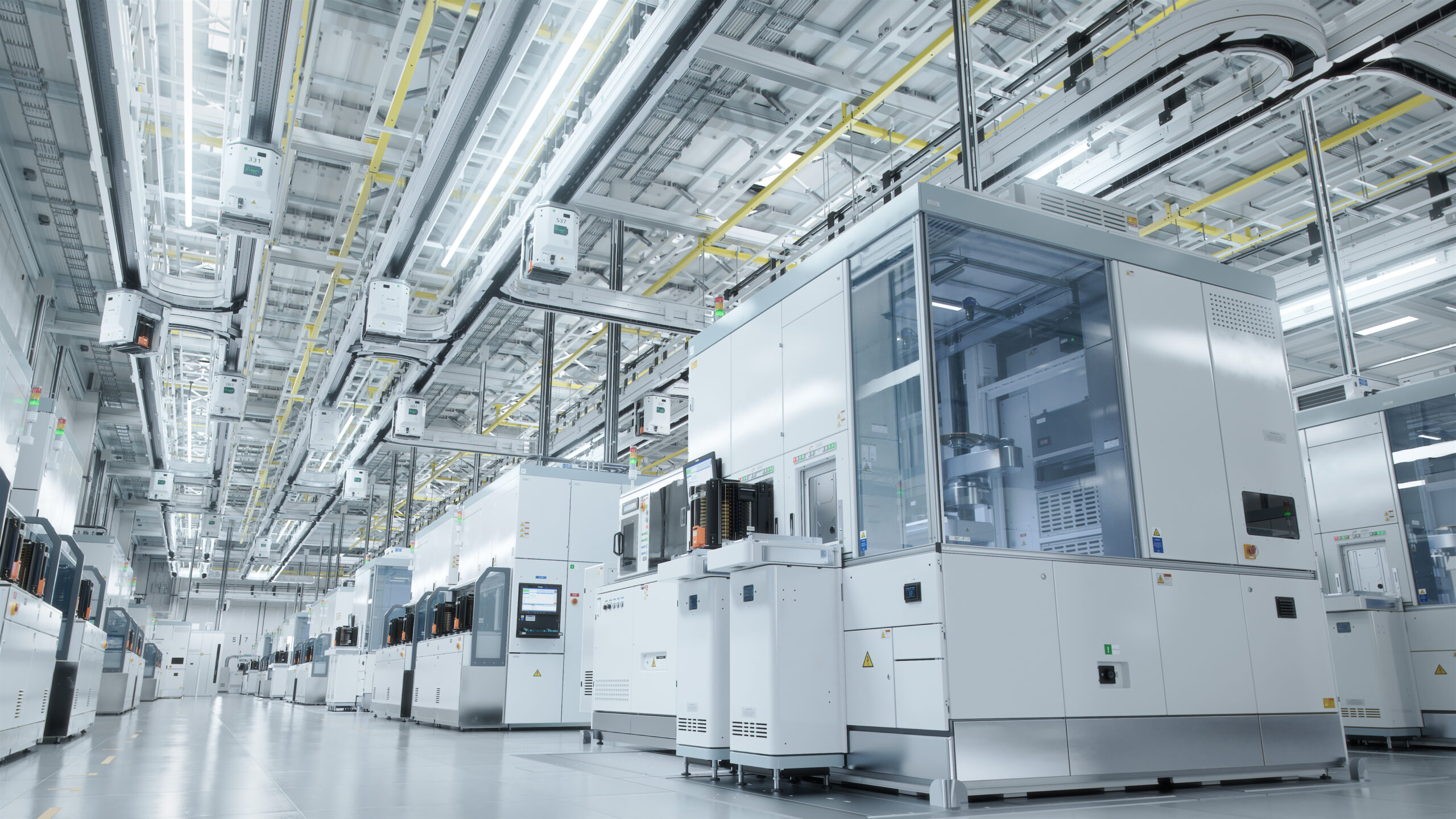
The client of this project is a leading integrated device manufacturer (IDM) based in Santa Clara, California. Having maintained over 60% market share for decades, the IDM has driven innovation across every phase of production and solidified its position as an industry leader. This leadership includes significant advancements in semiconductor lithography and etching.
Lithography and etching are the processes in are the front-end processes in wafer fabrication operations that create patterns and features on silicon substrates. Lithography uses UV light to transfer a pattern from a photomask to a photosensitive chemical on the wafer. Etching removes material from the wafer to reveal the desired pattern. Etching involves either a “wet” or “dry” method. Wet etching uses liquid chemicals to remove material while dry etching employes reactive plasmas. Both wet-bench and dry-etch systems demand strict chemical delivery, exhaust handling, and effluent disposal. The intricate nature of these processes require that all fab operations occur only in cleanroom environments.
The client aimed to maximize the uptime of their vibration-sensitive, cleanroom facility. To that end, they needed to streamline their workflows by supporting frequently fluctuating automation infrastructure. Their challenge was achieving even more functionality per square foot in an already-highly active five-floor fab complex. They decided to hire EA to audit and design optimized solutions to meet this goal.
In addition to the audit, the client needed help to design control systems for the storage, transfer, and neutralization of acid waste and volatile compounds. Given that the client runs semiconductor manufacturing operations at a large scale, it was critical that they had supporting infrastructure to match the quantity, density, and quality of the production process.
Enterprise Automation (EA) executed a thorough audit employing P&ID analysis, redundancy assessments, network evaluations, and I/O validations to fortify the semiconductor fabrication plant’s 80+ control systems. After conducting site walks and panel inspections and scrutinizing over 21,000 I/O points, the audit yielded crucial insights. This step provided a comprehensive understanding of the operational intricacies in each of the five facilities.
Through this process, EA identified areas for optimization, including documentation, near-end-of-life components, and unnecessary I/O. As a result, they strategically reorganized redundant I/O across existing Allen Bradley PLCs, maximizing the number of redundant functions and further preventing the likelihood of system disruption. This design overhaul aimed to minimize the risk of downtime during critical processes such as waste management, compound neutralization, HVAC, and other essential processes in device manufacturing.
In tandem with the audit, EA was tasked with the design of precision-driven control systems tailored for storing and transferring various types of hazardous waste products. These designs handled corrosive solvent waste, solvent acid waste, phosphoric acid waste collection, nitric acid waste collection, volatile organic compound solvent exhaust, and the bulk caustic feed system. EA wrote control narratives for each system detailing the I/O, alarms, and algorithms which would ensure safe, efficient operations. Each design adhered to stringent industry standards, was thoroughly documented, and aligned with the system redundancy principles defined in the audit.
EA’s comprehensive audit and control system expansion of the Client’s facility reflects their commitment to ensuring the resilience, efficiency, and future-ready nature of the Client’s semiconductor automation infrastructure. This integration of audit precision with innovative designs solidifies EA’s position as a trusted partner capable of delivering high-performance solutions, irrespective of the industry’s dynamic nature.
We use cookies to improve your experience on our site. By using our site, you consent to cookies.
Manage your cookie preferences below:
Essential cookies enable basic functions and are necessary for the proper function of the website.
These cookies are needed for adding comments on this website.
Google Tag Manager simplifies the management of marketing tags on your website without code changes.
These cookies are used for managing login functionality on this website.
Statistics cookies collect information anonymously. This information helps us understand how visitors use our website.
Google Analytics is a powerful tool that tracks and analyzes website traffic for informed marketing decisions.
Service URL: policies.google.com (opens in a new window)